This is the question that keeps people from booking, and they are right to ask it. I have walked up to plenty of South Jersey homes where the last guy left wand marks across the vinyl, or worse, drove water up under the lap joints and grew mold inside the wall. So let me answer it straight.
Quick answer
Yes, pressure washing can damage vinyl siding. A high-pressure blast aimed straight at the seams can crack panels, strip the finish, and force water behind the siding where it grows mold you cannot see. The siding itself almost never needs that pressure. It needs low pressure and the right cleaning solution, which is called soft washing.
The problem is not water. The problem is pressure pointed at a surface that was never built to take it. Vinyl siding hangs in loose, overlapping panels on purpose, so it can expand and contract with the seasons. Those same gaps are exactly where a 3,000 PSI stream sneaks behind the wall. Fifteen years in, and the worst siding damage I see is almost never from dirt. It is from someone trying to clean dirt the wrong way.
Can you pressure wash vinyl siding at all?
You can put water on it. What you should not do is hit it with the high-pressure, narrow-tip blast that the word "pressure washing" makes people picture. Manufacturers like CertainTeed and Royal Building Products say it plainly in their care guides: use low pressure, keep the stream level, and never aim up under the laps. The second you ignore that, you are gambling with a wall that costs thousands to replace.
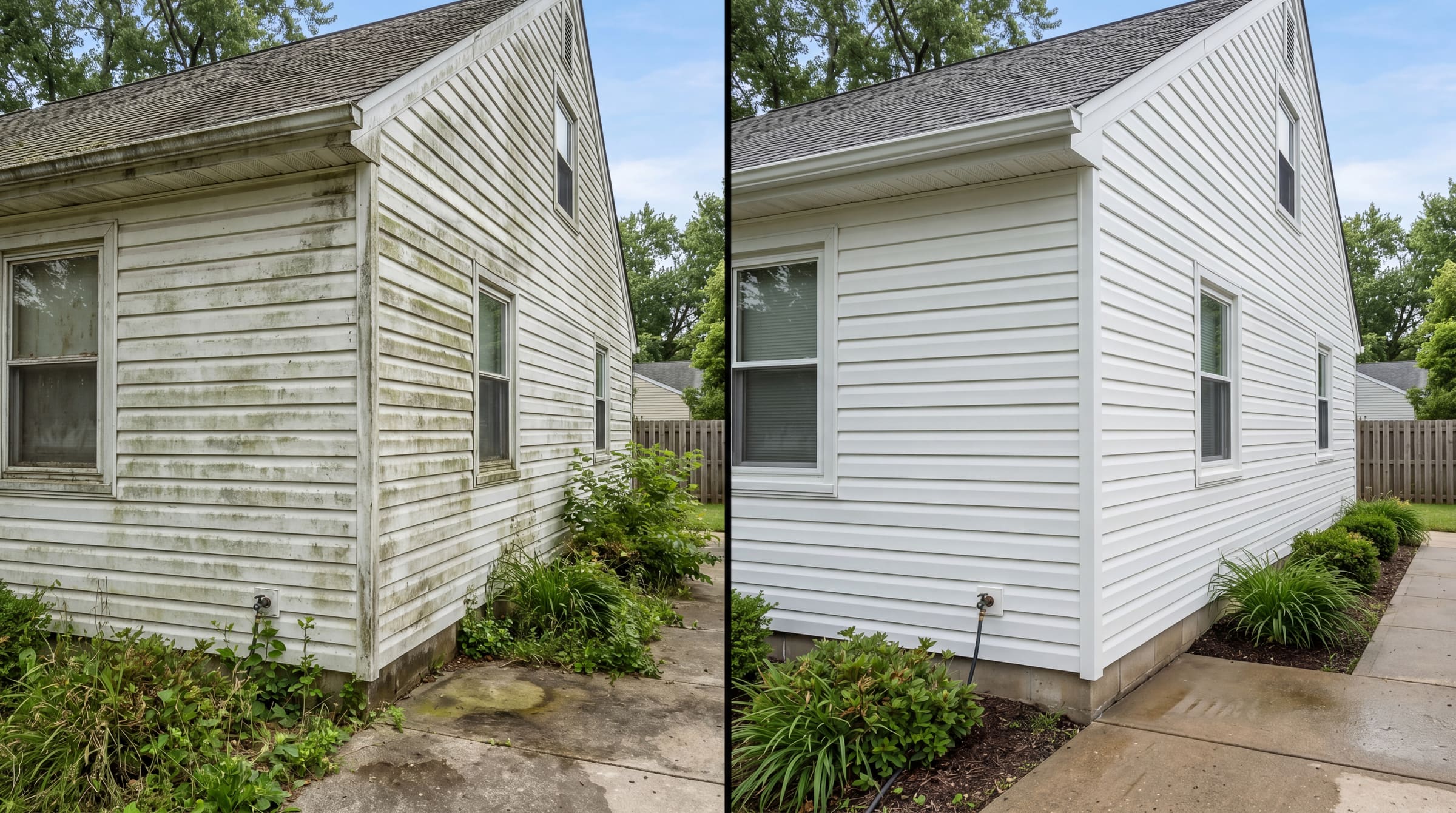
Here is the part most homeowners never hear. The dirt on your siding, the green and black streaking up the north wall, is algae and mildew. It is alive. Pressure does not kill it. It just blasts the visible part off the surface while the colony underneath stays rooted, which is why the green keeps coming back a few months later. You paid for a wash and the problem returns before the next season.
What actually damages vinyl siding
After enough years on enough houses, the damage falls into four buckets:
- Cracked and chipped panels. Vinyl gets brittle, especially older siding and anything that has baked in the sun for fifteen-plus years. A direct high-pressure hit can crack it on contact.
- Water behind the siding. This is the expensive one. Force water up under the laps and it sits in the wall cavity. Mold, rotted sheathing, and a problem you do not find until it is a big one.
- Stripped oxidation and uneven streaking. Old vinyl chalks as it ages. Blast it unevenly and you get bright streaks where the wand passed and dull patches where it did not. Now the wall looks worse than when you started.
- Blown-out caulk and trim seals. High pressure peels the caulk around windows and trim, which is the exact seal keeping water out of the house.
Soft washing vs pressure washing
This is the whole answer in one table. Same goal, two completely different methods, and only one of them belongs on your siding.
| Soft washing | High-pressure washing | |
|---|---|---|
| Pressure | Low, about the force of a garden hose | High, 2,000 to 4,000 PSI |
| What does the work | Cleaning solution that kills algae at the root | Raw force, scrubbing the surface |
| Right for | Siding, soffit, stucco, wood, screens | Concrete, brick, paver flatwork |
| Result on vinyl | Clean, no marks, stays clean longer | Risk of cracks, streaks, water intrusion |
| How long it lasts | Months longer, the algae is dead | Weeks to months, the algae regrows |
If you only remember one line from this whole post, make it this: soft washing is for anything on the house, high pressure is for the flat ground. Mix those up and you either damage the siding or leave the driveway half clean.
How I wash a house without leaving a mark
Here is exactly what happens when I show up, so there are no surprises.
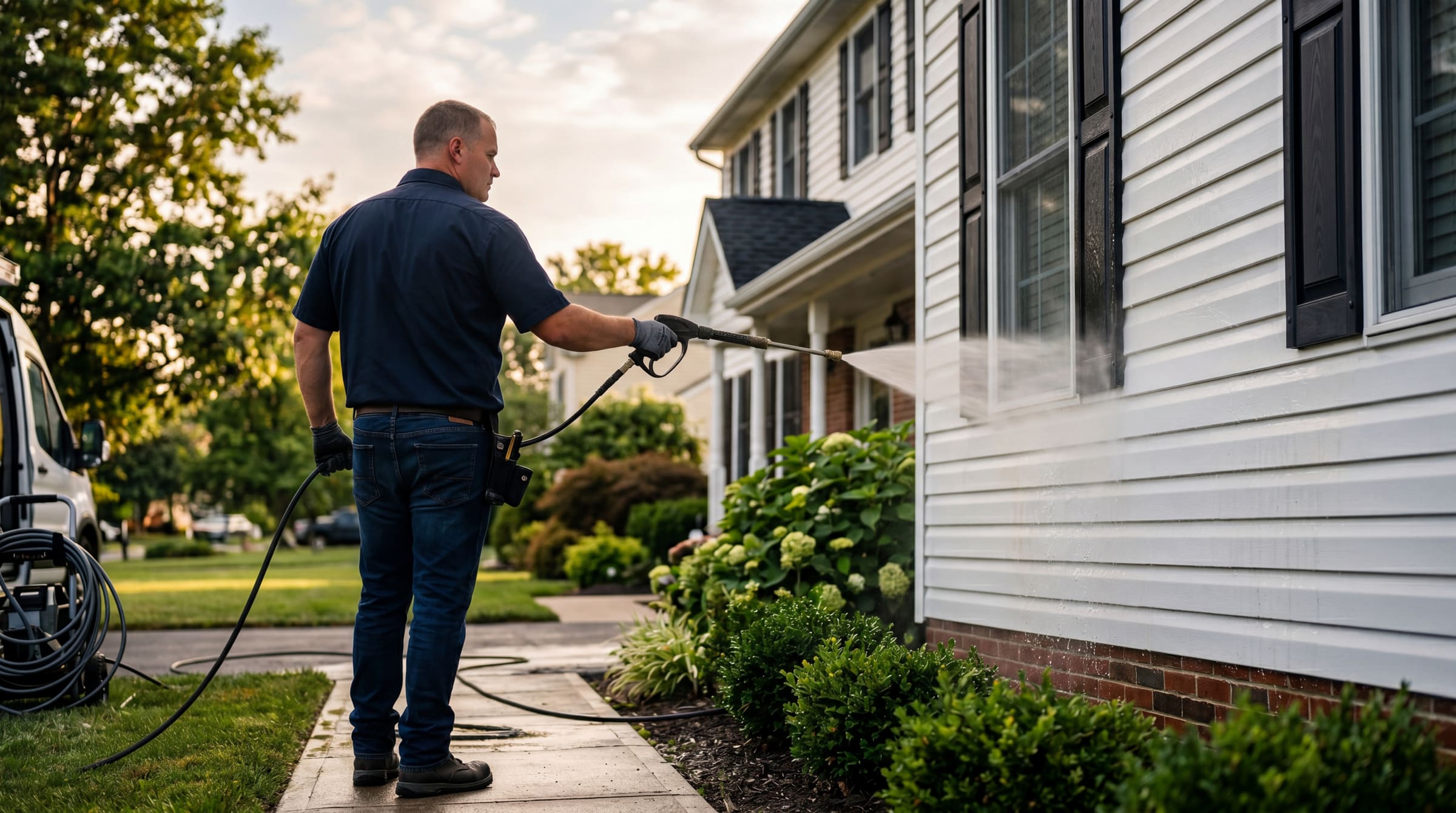
- I soft wash the siding. Low pressure, a cleaning solution matched to your surface, and I keep the stream level so nothing goes up under the laps. The chemistry does the work, not the force.
- I protect the landscaping. Plants get pre-wet and rinsed again after. I pull water from your spigot, so nothing exotic is going on your beds.
- I let it dwell, then rinse. Killing algae at the root is why the wall stays clean through the season instead of greening up by August.
- I treat the flat surfaces separately. The driveway and walkways get a surface cleaner and the right pressure, because that is where pressure actually belongs.
Fifteen years of doing it this way, and I have zero damage claims. That is not a slogan, it is the whole reason I soft wash. I treat every wall like it is my own, because the customer down the street is going to ask the neighbor who did it.
What about a deck, fence, or older wood?
Same rule, even more important. Wood is softer than vinyl, so a high-pressure blast tears the grain and leaves a fuzzy, splintered surface. Deck and fence restoration is a soft-wash job followed by a brightener, never a pressure blast. If a contractor wants to power-blast your deck boards clean, that is a fast way to ruin a deck you will be sanding for a weekend.
Signs your siding was already washed wrong
If you have had the house done before and something feels off, look for these:
- Streaks that did not come from the weather, in the pattern of a wand stroke
- Green or black that came back within a few months of a "cleaning"
- A mildew smell inside an exterior wall, or a paint bubble that was not there before
- Cracked or chipped panels near the spigot or hose-bib height, where people aim a wand
None of those mean you are stuck. A proper soft wash fixes the algae problem for good, and the cracked panels can be swapped one at a time. But it is worth knowing what a bad wash looks like before you book the next one.
Common questions
Will pressure washing void my siding warranty? It can. Several vinyl manufacturers specifically warn against high-pressure cleaning in their warranty terms. Soft washing follows their care guidance, so it keeps you on the right side of it.
Is renting a pressure washer and doing it myself worth it? That is the exact decision that fills the r/pressurewashing threads with "I just did my first house and ran into a problem." A rental machine puts out more than enough pressure to crack a panel or drive water behind the wall. The chemistry, not the machine, is what actually cleans siding, and that is the part the rental counter does not hand you.
The honest version
I am not the cheapest quote you will get, and I will not pretend to be. What I am is the guy who has washed houses across Cherry Hill, Mt Laurel, Moorestown, and Merchantville for fifteen years without a single damage claim, on a method built around protecting your siding instead of risking it. That is worth a few dollars over the lowball that blasts the wall and disappears.
If your siding is green, streaked, or just tired, I will come look at it for free. Fifteen-minute walk-through, a firm number on the spot, and I call back within two hours. See the 5.0 stars on 17 Google reviews if you want to read what your neighbors say first.
Get a free estimate or call (267) 235-1885. Turning dirty into done right, without ever putting a mark on your siding.