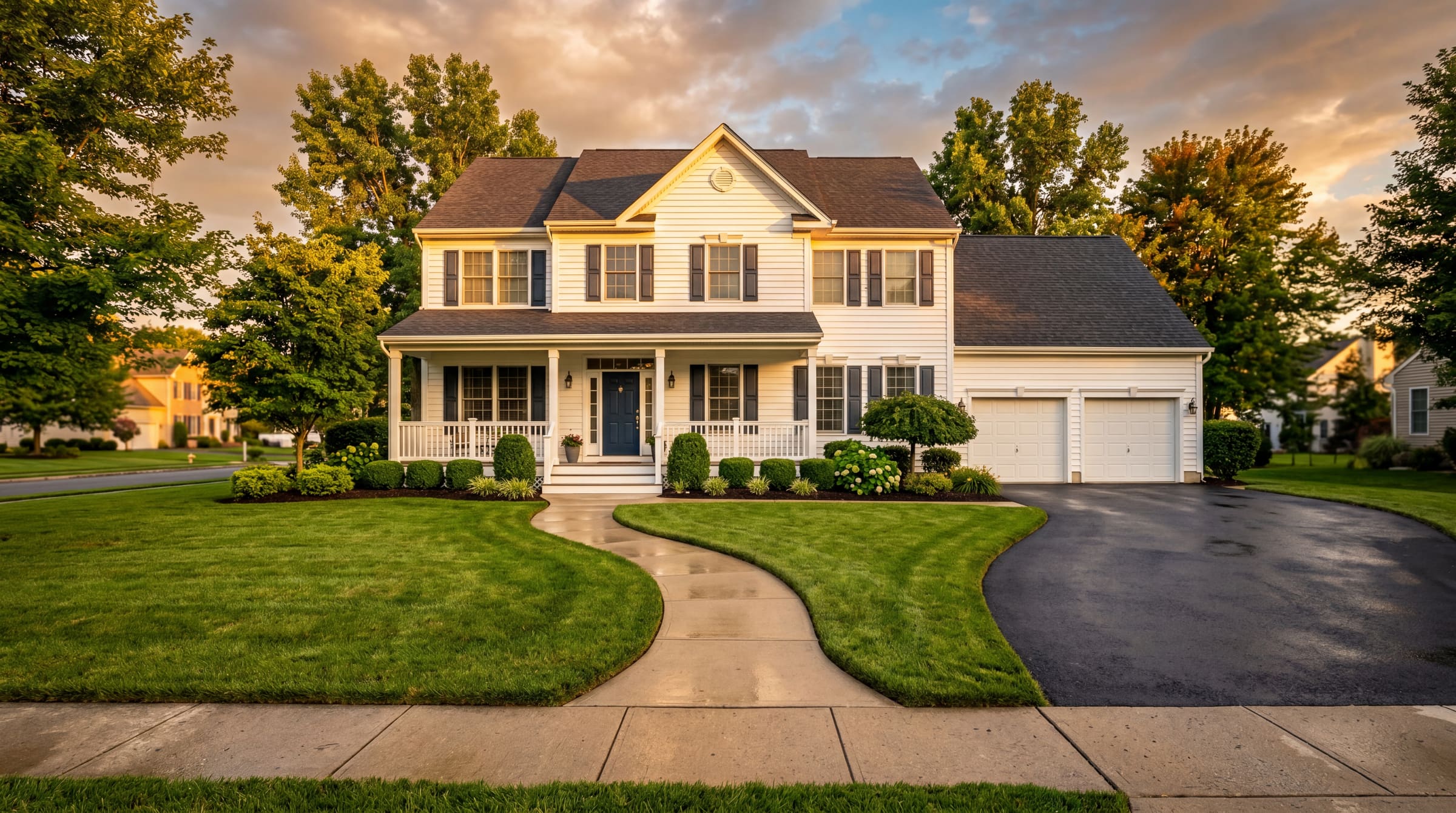
By June, the calls change. In March people ask when to wash their house. In June they ask if I can get the backyard ready before company comes over. Graduation parties, Father's Day, the Fourth. The patio that nobody looked at all winter is suddenly center stage.
Here's how I work through the three surfaces that take the most abuse in summer: the driveway, the patio, and the deck. Each one needs a different approach, and doing them in the wrong order means cleaning the same spot twice.
Start with the driveway and walkway
Concrete is the most forgiving surface out here, which is exactly why people let it go too long. A winter of road salt, spring pollen, and a few oil drips turns a light gray driveway into a blotchy mess you stop noticing because it happened slowly.
A concrete cleaning pass with a surface cleaner fixes the tone in one shot. Not a wand waving back and forth, which leaves stripes. A flat surface cleaner that covers the whole slab at even pressure. The difference shows up most at the edges and seams where dirt builds up thickest.
The two stains people think are permanent usually aren't. Orange streaks near the garage or along the bed line are almost always iron, not rust baked into the concrete. Those come up with the right treatment. Rust removal is a chemical job, not a pressure job. Blasting harder just etches the concrete and leaves the stain. If your sprinkler runs on well water, this is probably why the bottom of your foundation has that orange tint.
Then the patio pavers
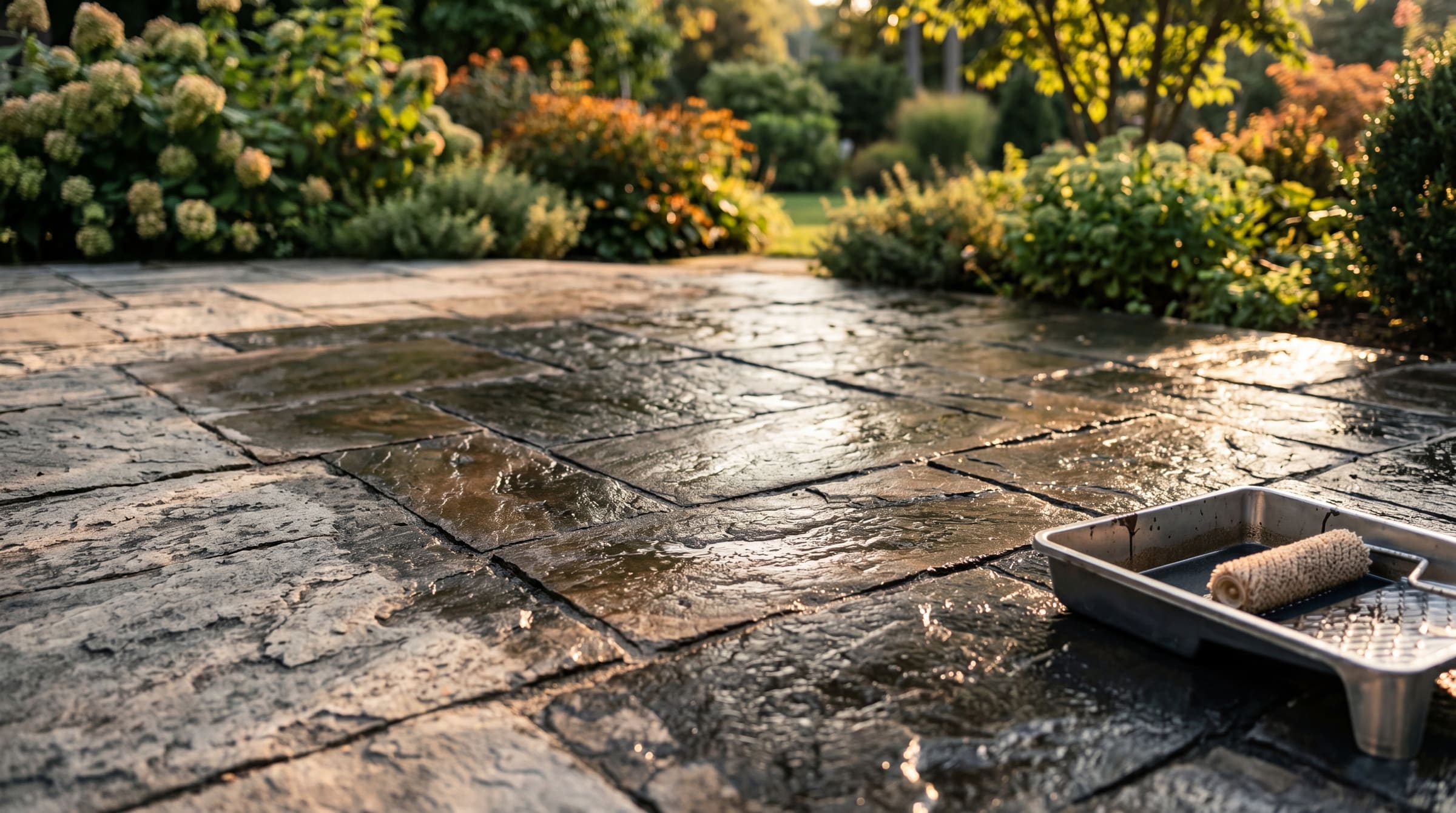
Pavers are where summer prep earns its keep, because this is the surface your guests actually stand on. Two things happen to pavers over a year. Algae and dirt darken the surface, and the joint sand between them washes out and grows weeds.
Cleaning alone is half the job. The real fix is clean, re-sand, then seal. Paver sealing locks new polymeric sand into the joints so weeds stop coming up, and it brings back the color that sun and foot traffic faded out. Done right it holds for three to five years. The patios I sealed two summers ago still shed a spilled drink like the day we finished.
One thing I tell every customer: do not seal dirty pavers. Sealing locks in whatever is on the surface, including the algae. If a company offers to seal without cleaning and re-sanding first, that is a shortcut you will regret in a year.
The deck is its own animal
Wood is the one surface where high pressure does real damage. A pressure washer on a wood deck gouges the soft grain between the harder rings and leaves a fuzzy, splintered surface that soaks up water and goes gray twice as fast.
Deck restoration is a soft-wash and brightening process, not a blasting job. The cleaner lifts the gray oxidized layer and the mildew living in it, a brightener evens out the tone and reopens the grain, and then the wood is ready to take stain or sealer. Skip that prep and the new finish peels by August.
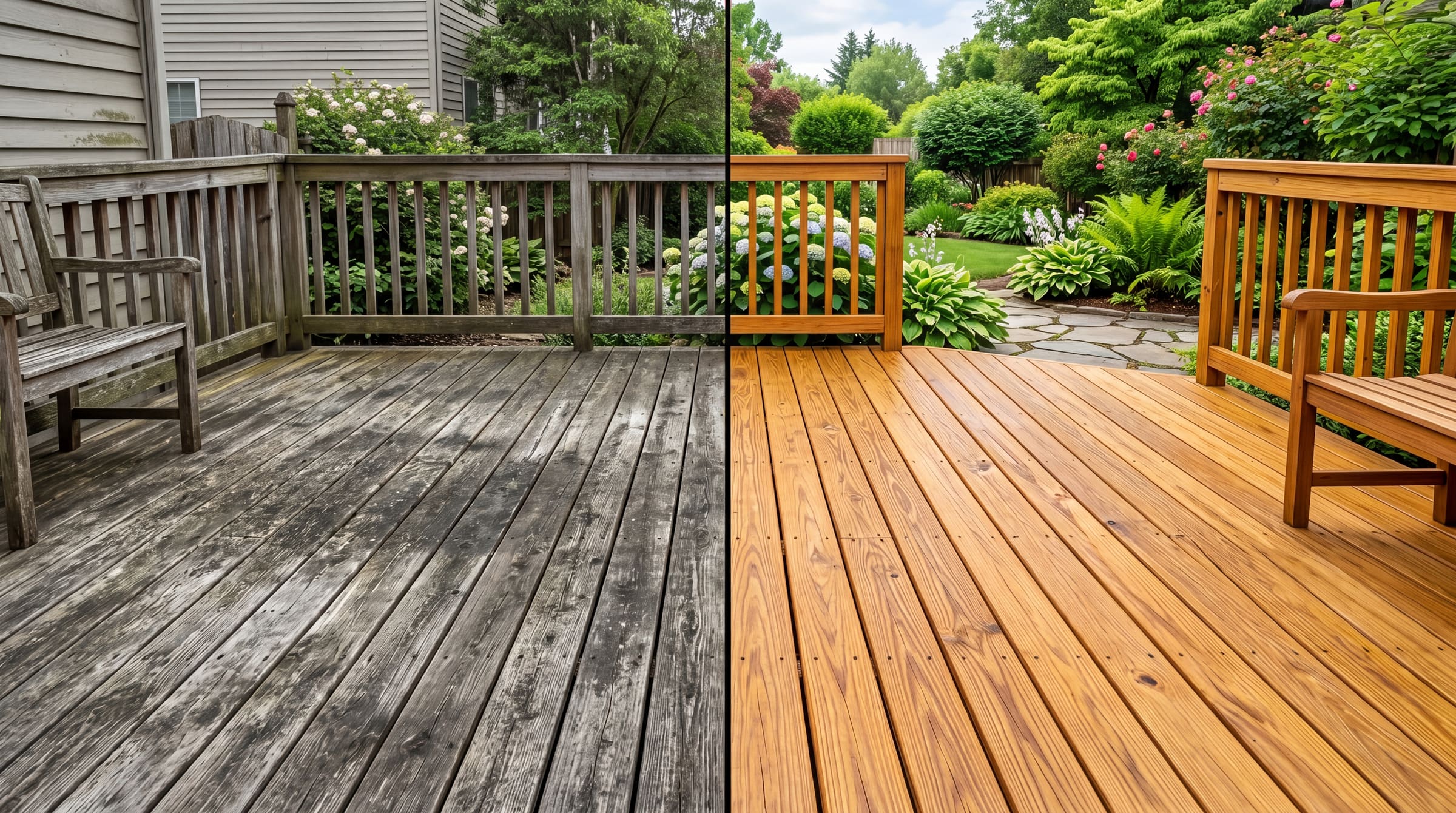
If your deck has not been sealed in three years, summer is the deadline, not a nice-to-have. South Jersey humidity and afternoon thunderstorms punish bare wood. Seal it before July and it shrugs off the worst of the season.
The order matters
When I do a full backyard before a party, I work top down and dirty to clean so nothing gets re-soiled:
- Driveway and walkways first. They are the dirtiest and they drain toward the street, away from everything else.
- Patio next. Clean and re-sand. If we are sealing, that cures while we move on.
- Deck last. Soft-wash and brighten, then seal once it dries. Wood needs a dry window, so it goes at the end.
Most full backyard packages run a half day. If you want it spotless for a specific date, give me a week of lead time so the sealer on the pavers and deck has time to cure before anyone walks on it.
When to seal, and when to skip it
Not every surface needs sealer every year. Here is my honest read after fifteen years of doing this in South Jersey, which you can read more about on my about page:
- Pavers: Seal every three to five years. Worth it. Stops weeds, holds color, makes spills wipe up.
- Stamped or colored concrete: Seal it. The color coat fades fast without protection.
- Plain broom-finish concrete: Usually skip it. A clean every year or two is enough.
- Wood decks: Seal every two to three years, sooner if water stops beading on the surface.
If someone tells you everything needs sealing every year, they are selling sealer, not solving a problem.
Want it done before the Fourth?
June books up fast, and sealed surfaces need cure time, so the backyards I finish for the holiday weekend are usually booked by mid-June. I do a free 15-minute walk-through, look at every surface, and give you a firm number on the spot. Most full backyard packages land between $450 and $850 depending on square footage and how much sealing is involved.
You can see what neighbors are saying on my reviews page, then get an estimate or call (267) 235-1885. Tell me your date and I will work backward from it.