A homeowner in Cherry Hill called me last month convinced her driveway was ruined. Two rust-orange half circles, right where her old patio furniture used to sit. She'd already tried a pressure washer rental and a bottle of driveway cleaner from the hardware store. Neither one moved it. Some spots even looked darker after.
That's the part people don't expect. Rust isn't dirt sitting on the surface. It's iron that has chemically bonded to the concrete itself, and pressure or a generic cleaner just can't break that bond.
Why pressure washing doesn't touch rust
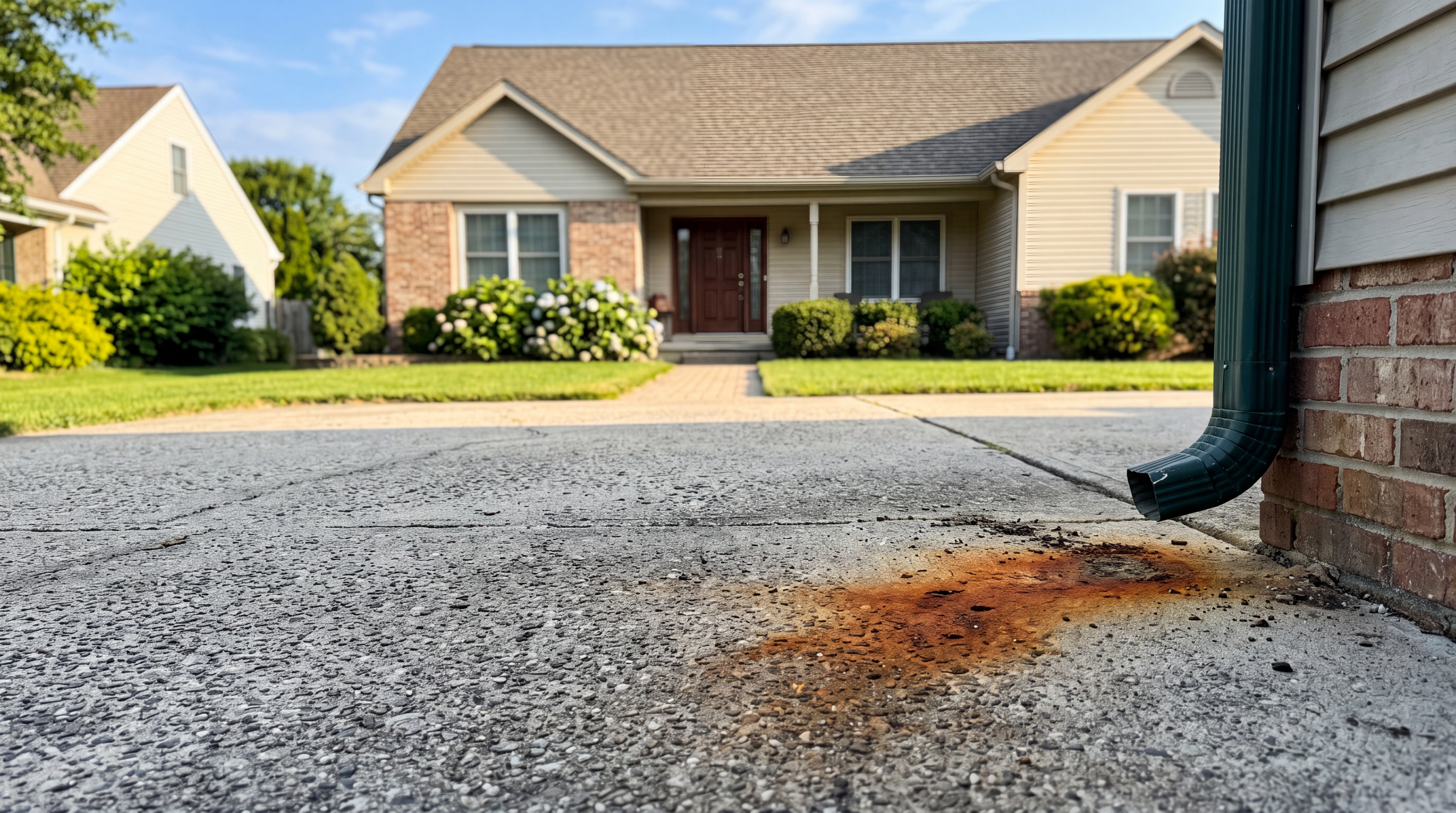
Regular dirt, pollen, and algae sit on top of concrete. Blast it with enough water pressure and it lifts off. Rust doesn't work that way. It forms when iron, whether from a patio chair leg, a fertilizer spreader, an irrigation line, or a rusting downspout, oxidizes and soaks into the porous surface of the concrete. By the time you can see the orange stain, the iron is already inside the slab, not on it.
Run a pressure washer over that and you're just wetting the stain. Some homeowners scrub harder, which can actually drive the stain deeper into the pores and make it look worse. I see this constantly on driveways around Voorhees and Mt Laurel, where irrigation systems with well water are common. Well water carries dissolved iron, and every time a sprinkler head overspray hits the same six inches of driveway, it lays down another thin layer of stain. By the second summer it's a visible ring nobody remembers spraying.
What actually removes it
The fix is chemistry, not force. A reactive, acid-based cleaner formulated specifically for iron stains breaks the chemical bond between the rust and the concrete, so the stain can be rinsed away instead of scrubbed off. The three most common sources need slightly different treatment:
- Battery acid stains. Usually from a car battery that leaked in a driveway spot. These respond well to a standard iron reactive.
- Fertilizer rust. Small circular spots from granular fertilizer left on wet concrete. Same iron reactive, shorter dwell time since the staining is usually shallower.
- Irrigation and well-water iron. The toughest of the three because it's repeated exposure, not a one-time spill. This often needs a second treatment pass.
Getting the dwell time right matters as much as picking the right product. Too short and the stain doesn't fully lift. Too long, or the wrong product on the wrong surface, and you etch the concrete or discolor the stone next to it. Rust removal is the one service on my list I tell people not to DIY, because a bad reactive chemical does more damage than the stain itself.
Service · learn moreRust RemovalIron stains from battery acid, fertilizer, or irrigation overspray. Treated with the right reactive, spot by spot, so the concrete around it never gets touched.See the page →What about pavers and natural stone?
Different rules apply. Limestone, travertine, and some bluestone react badly to the acid-based reactives that work on concrete. They'll etch or discolor if you use the same product. If your rust stain is on a paver patio instead of a poured driveway, that's a stone-safe formulation, and it's worth confirming the surface before anyone applies anything.
Rust removal versus a regular concrete wash
These are two different jobs, and it's worth knowing the difference before you book either one.
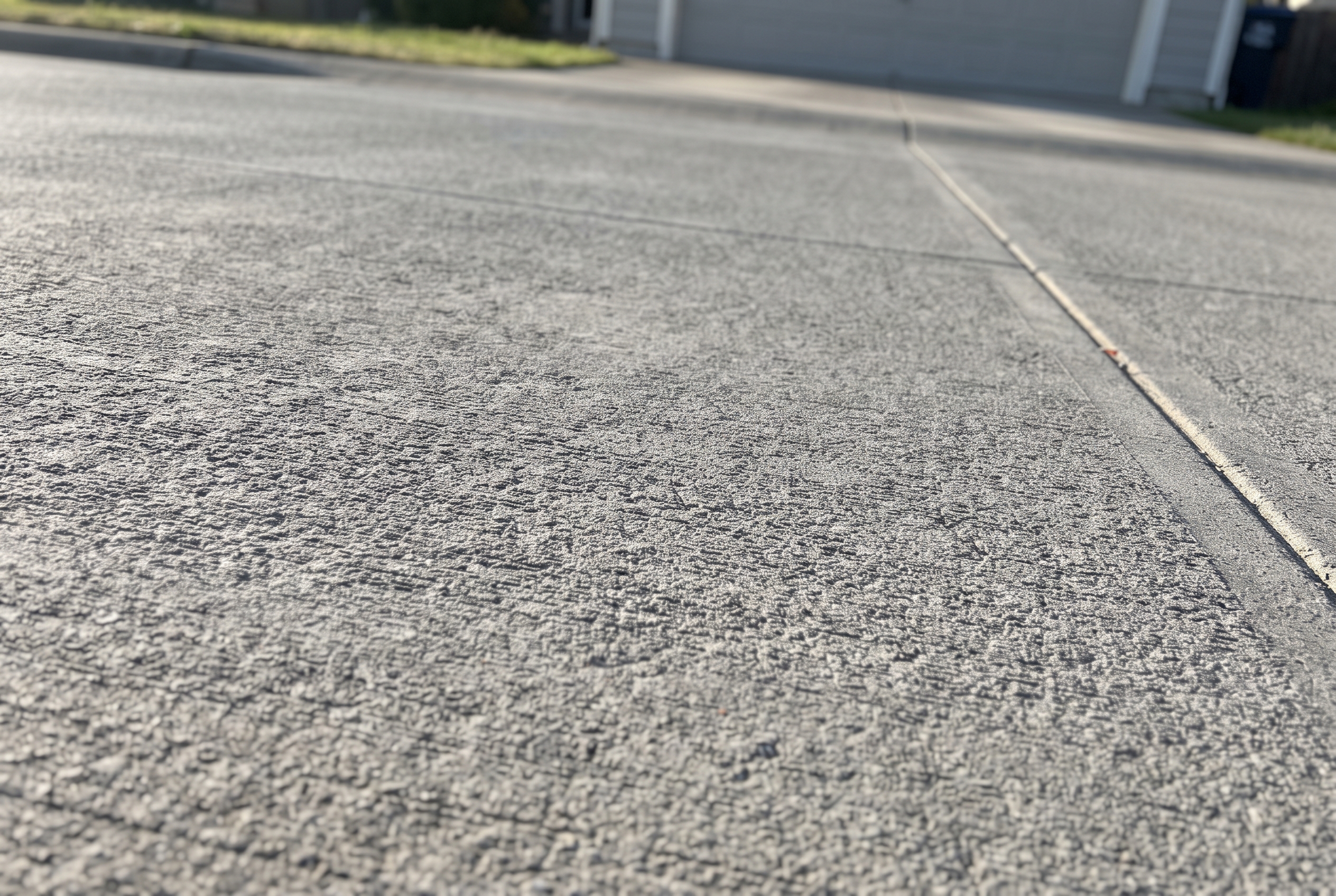
A standard concrete cleaning job uses a surface cleaner attachment to lift dirt, algae, and general grime off a driveway or patio in even, streak-free passes. It's the right call for a dull, dingy slab. It will not remove a bonded rust stain, because that's a chemical problem, not a dirt problem. Rust removal is a targeted, spot-by-spot treatment. Most jobs combine both: the whole driveway gets a surface-cleaner pass, and the rust spots get the reactive treatment on top of that.
Can rust stains ever come back?
If the source is still there, yes. A rusting downspout that keeps dripping onto the same spot, or a sprinkler head that keeps overspraying the driveway edge, will restain the concrete even after a proper treatment. I always point this out at the walk-through so you're not paying to treat the same stain twice a year. Fixing the source (a downspout extension, redirecting a sprinkler head) is usually a five-minute job that saves you the second call.
What it costs and how I quote it
Rust removal is priced per stain, based on size, age, and source, since a fresh six-inch fertilizer spot and a five-year-old irrigation ring take very different amounts of chemistry and time. I quote it during a free 15-minute walk-through alongside any paver sealing or concrete cleaning you're considering, so you get one firm number instead of piecing quotes together. Older stains that have penetrated deep into porous concrete may not lift 100 percent. I'll tell you exactly what to expect before I start, not after.
I've spent fifteen years figuring out which reactive works on which stain across South Jersey driveways, from Merchantville to Camden. If you want the full origin story on how I ended up specializing in the stuff other guys skip, it's on my about page.
If you're looking at a rust stain right now
Don't scrub it, and don't reach for a generic rust remover made for bathtubs or grills. Concrete needs a specific reactive, applied correctly, or you risk making the stain more visible instead of less. Read what South Jersey homeowners say about the work, then get a free estimate or call (267) 235-1885. I'll tell you straight whether it's a quick spot treatment or something that needs a second pass.